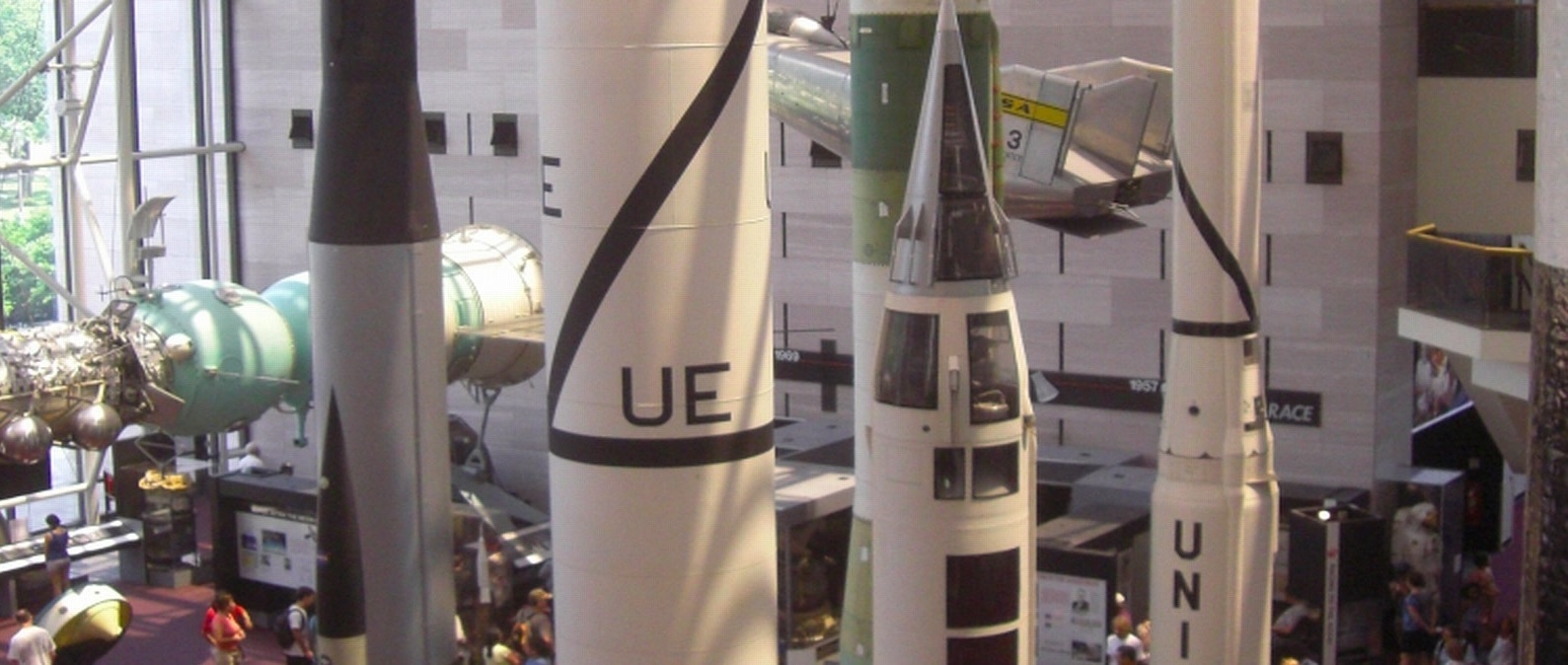

The history of early space exploration.
Episodes

Aug 10, 2017
Aug 10, 2017
19 min
“We are the first to have given a rocket a speed of 3,300 mph. We have thus proved that it is quite possible to build piloted missiles or aircraft to fly at supersonic speeds. We did it with automatic control. Our rocket today reached a height of nearly 60 miles. We have invaded space; we have proved rocket propulsion practical for space travel.” Walter Dornberger
Aug 9, 2017
Aug 9, 2017
23 min
During the late 1920’s and throughout the 1930’s progress progress in rocket design was made in fits and starts with unclear goals. However, many technological advances in liquid fueled rockets were made. The United States Germany, Russia, France, Italy, and Great Britain all had rocket research programs. The most significant advances occurred in Germany, the U.S. and Russia. But, before we proceed with the history, I want to explain how a liquid fueled rocket works.
Aug 9, 2017
Aug 9, 2017
16 min
Mankind has dreamed of traveling into space for centuries, but in the twentieth century, scientific and technical capabilities converged with this dream for the first time. The potential of the rocket was realized independently by three different men, born in different countries, who never met each other in person. These men Tsiolkovski of Russia, Goddard of the U.S. and Oberth of Germany, each derived the same conclusions about the future of space travel. Their conclusions that become the basic working formulas of the space age.
Aug 9, 2017
Aug 9, 2017
20 min
From our small world we have gazed upon the cosmic ocean for thousands of years. Ancient astronomers observed points of light that appeared to move among the stars. They called these objects planets, meaning wanderers, and named them after Roman deities — Jupiter, Mars, Mercury, Venus, and Saturn, and Jupiter. The stargazers also observed comets with sparkling tails, and meteors or shooting stars apparently falling from the sky.
Often, the early rocket pioneers are lost in the shadows of time. The space rockets of today are the result of more than 2,000 years of invention, experimentation, and discovery. The foundations for modern rocketry were laid, first by observation and inspiration and then by methodical research.